Category Archives: Russian literature

Mikhail Lermontov, “Vykhozhu odin ya na dorogu” (Alone I set out on the road)


Михаил Лермонтов

Выхожу один я на дорогу


Выхожу один я на дорогу;

Сквозь туман кремнистый путь блестит;

Ночь тиха. Пустыня внемлет богу,

И звезда с звездою говорит.

В небесах торжественно и чудно!

Спит земля в сиянье голубом…

Что же мне так больно и так трудно?

Жду ль чего? жалею ли о чём?

Уж не жду от жизни ничего я,

И не жаль мне прошлого ничуть;

Я ищу свободы и покоя!

Я б хотел забыться и заснуть!

Но не тем холодным сном могилы…

Я б желал навеки так заснуть,

Чтоб в груди дремали жизни силы,

Чтоб дыша вздымалась тихо грудь;

Чтоб всю ночь, весь день мой слух лелея,

Про любовь мне сладкий голос пел,

Надо мной чтоб вечно зеленея

Тёмный дуб склонялся и шумел.


Mikhail Lermontov

Alone I set out on the road

Alone I set out on the road;

The flinty path is sparkling in the mist;

The night is still. The desert harks to God,

And star with star converses.

The vault is overwhelmed with solemn wonder

The earth in cobalt aura sleeps. . .

Why do I feel so pained and troubled?

What do I harbor: hope, regrets?

I see no hope in years to come,

Have no regrets for things gone by.

All that I seek is peace and freedom!

To lose myself and sleep!

But not the frozen slumber of the grave…

I’d like eternal sleep to leave

My life force dozing in my breast

Gently with my breath to rise and fall;

By night and day, my hearing would be soothed

By voices sweet, singing to me of love.

And over me, forever green,

A dark oak tree would bend and rustle.


*****************************************************


This poem is recited from memory by Mikhail Gorbachev at the conclusion of Werner Herzog’s stupendous film Meeting Gorbachev.

– posted by Roger W. Smith

   May 2022


*****************************************************

addendum, June 1, 2022

Elisabeth van der Meer, host of the site A Russian Affair, has sent me a translation of Lermontov’s poem (which I regard as a better than the translation I posted) by Michael Longley:

Night-Walk

I come out alone onto the boreen,
A flinty path glimmering through mist,
Stilly night, wilderness listening to God,
The constellations in conversation,

Astonishing things up there in the sky,
The earth dozing in pale-blue radiance.
Why, then, am I so downhearted? What
Am I waiting for? What do I regret?

I’ve stopped expecting anything from life,
I don’t feel nostalgic about the past.
I long for freedom and tranquility,
I long for forgetfulness and sleep,

But not the grave’s spine-chilling coma.
I would prefer to fall asleep for ever
With the life force snoozing in my breast
As it rises and falls imperceptibly,

Night and day a kind voice soothing my ears
With affectionate lullabies about love
And over me, green for eternity,
A shadowy oak leaning and rustling.

— translated by Michael Longley
an exchange about (Russian, American literature) – UPDATED


Between me and my Russian collaborator Nataliya this morning. We are working together on translations of Pitirim Sorokin’s early works from Russian into English.


*****************************************************

NATALIYA

I don’t see a problem with the translation of the poem.* I know that there are many good translations of nineteenth-century Russian poetry into English. I myself saw such publications in the Library of Valdosta State University.

Lermontov is a great Russian poet of the nineteenth century, the second after Alexander Pushkin. Unfortunately, he did not live long. He was killed in a duel when he was only twenty-seven years old. Of course, his poems were translated into English.

We just need to find these translations. If I could go to Moscow or St. Petersburg, I would find them in the library, but this is not possible yet. Let’s not rush it. This is not the only poetic quote in Sorokin’s book. While we can find translations on the internet, then we will check and search in high-quality and reliable publications. We don’t need professors for that.

*Дума (Mediation), a poem by Mikhail Lermontov, from which Sorokin quotes several lines


*****************************************************

ROGER

Thanks for the message and wishes, Natalia.

An internet friend of mine, Elisabeth van der Meer, has a site in English devoted to Russian literature. I like her site. She always reads my stuff. She had a recent post about Lermontov:

https://arussianaffair.wordpress.com/2020/10/15/the-most-scottish-of-the-russian-writers-mikhail-lermontov/

Of course, I had heard of Lermontov but knew very little about him, and still do (know little).

I will get back to Sorokin soon.

You might like this post of mine:

spring (as seen by The Bard, by Tolstoy; and felt by us all, myself included)


I became engrossed in Tolstoy in my mid-twenties. I read his major novels pretty much in a row. When I read the passage about spring at the opening of Воскресение [Resurrection], it made a powerful impression on me. Around that time, I also got into Chekhov, briefly — but, again, I found his works unforgettable.**

All of this was in English translation.

The thing about the passage about spring (Tolstoy’s) that impresses me greatly is how Tolstoy is the great realist, descriptive novelist — nothing is fanciful — “All is true,” as Balzac said at the beginning of one of his most famous novels novels, Père Goriot — yet there is always a weighty level of deep philosophical meaning.

Herman Melville comes closest to achieving this among the great American writers.

** Especially, in my case, a lesser known Chekhov work:  Остров Сахалин (translated as The Island: A Journey to Sakhalin); not the most artistic of Chekhov’s works, but I found it very powerful.


*****************************************************

NATALIYA

Dear Roger,

Elisabeth has a wonderful website. Her post about Lermontov is great. I knew about Lermontov’s Scottish roots, but she told about it so interestingly and beautifully. I’m going to the North Caucasus in the summer, just in those places that are associated with the biography of Lermontov and his death. There are very beautiful museums and monuments there. I’ll send you photos.

I also love Leo Tolstoy and believe that at every age, at different stages of life, people discover new content in his works. He is a child of his own time and at the same time timeless. That makes him great.


*****************************************************

ROGER

Tolstoy is the best novelist ever! Competitors? I would say Herman Melville (one great book), Victor Hugo (same), Charles Dickens. And, yes, Tolstoy is timeless.

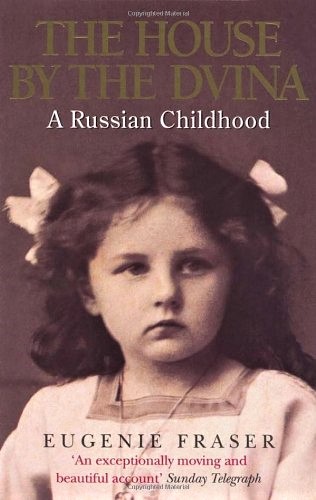
P.S. The House by the Dvina by Eugenie Fraser is an interesting book. I bought it in London during a trip overseas.


— posted by Roger W. Smith

   March 7, 2021; updated March 10


*****************************************************


addendum, March 2025


The web site A Russian Affair has been deleted and no longer exists.

thoughts about Gogol


Elisabeth van der Meer has another great post at

https://arussianaffair.wordpress.com/2017/08/28/typically-gogol/

which is about the Russian author Nikolai Gogol.

I responded as follows.


*****************************************************

Great post, Elisabeth. Very interesting and insightful.

A couple of things that come to mind.

The comparison to Dickens is very apt. The ability to create characters who are hilarious, idiosyncratic, total originals, and almost like distortions of real life, yet who — in their incongruity with what we think of us as “average” — are fully human and totally believable.

I read Henri Troyat’s biography of Gogol. I recall it as being very good.

Regarding Gogol’s sexuality, Simon Karlinsky’s monograph The Sexual Labyrinth of Nikolai Gogol (1976) is excellent. Karlinksy, a professor of Slavic languages and literature at UCal-Berkeley, was a top-notch scholar who produced another outstanding work on Chekhov (letters plus extensive commentary). I have read both books; they were well worth it.

The Wikipedia entry on Gogol contains the following paragraph:

In 1834 Gogol was made Professor of Medieval History at the University of St. Petersburg, a job for which he had no qualifications. He turned in a performance ludicrous enough to warrant satiric treatment in one of his own stories. After an introductory lecture made up of brilliant generalizations which the “historian” had prudently prepared and memorized, he gave up all pretense at erudition and teaching, missed two lectures out of three, and when he did appear, muttered unintelligibly through his teeth. At the final examination, he sat in utter silence with a black handkerchief wrapped around his head, simulating a toothache, while another professor interrogated the students. This academic venture proved a failure and he resigned his chair in 1835.

Troyat does a good job of describing this incident.

I will be eagerly awaiting your next post.


*****************************************************

Ms. van der Meer’s site is one of the best sites devoted to literature I have found. If you happen to be interested in or love Russian literature, it bears checking out. I keep recommending it to friends, including those whose literary tastes I am not sure of, but who I feel would appreciate the site.

Her site, “A Russian Affair,” is at

https://arussianaffair.wordpress.com/


— Roger W. Smith

   August 2017


*****************************************************

addendum, March 2025

The web site A Russian Affair has been deleted and no longer exists.