Tag Archives: Roger Smith

apologias for censorship


Ross Douthat, ‘Do Liberals Care if Books Disappear’

Ross Douthat, ‘do liberals care if books diseapear’


Alyssa Rosenberg, ‘The Great Dr. Seuss Hysteria’

Alyssa Rosenberg, ‘The Great Dr. Seuss Hysteria’


Of all kinds of credulity, the most obstinate and wonderful is that of political zealots; of men, who being numbered, they know not how or why, in any of the parties that divide a state, resign the use of their own eyes and ears, and resolve to believe nothing that does not favour those whom they profess to follow.

— Samuel Johnson, Idler No. 10

A couple of weeks ago I posted on Facebook the following op-ed by New York Times columnist Ross Douthat (Word document above):

Do Liberals Care if Books Disappear?

The Dr. Seuss cancellation illustrates all the problems that they used to have with censorship.

The New York Times

March 6, 2021

See also: “The Great Dr. Seuss Hysteria of 2021 shows how silly and unimaginative adults can be,” by Alyssa Rosenberg, The Washington Post. March 3, 2021 (Word document above)

Theodor Geisel, known as Dr. Seuss, was an author of illustrated children’s books.


*****************************************************

This led to the following exchange on Facebook:


Roger W. Smith

I always thought censorship was a bad thing, but now we are being told it’s often a good thing. And if you ban some books by an author but not all of them, that’s not censorship. And here I was choosing whom to read on the basis of what I thought of the book as a literary work, monograph, etc. But now I find that certain works are contaminated and may not be available any longer. Who decided that? The self-appointed cultural commissars. Have they actually read the banned authors? Want to guess? We are dealing with philistines posing as trustees of culture. How many of them, do you think, are familiar with what Milton had to say about this 400 years ago? Or have a clue as to who Milton is?

“This week I learned from a different kind of liberalism that only easily triggered rubes care when offensive books are made to disappear. … often the Seuss cancellation was dismissed as a boob bait for Fox News viewers and a move to which only someone sunk in white anxiety could possibly object. … Plus, we were told, it’s only six books. And is Seuss so great anyway?’ ” — Ross Douthat

This is the very definition of sophistry (what Douthat is identifying).

But since Fox News types are crying censorship, it (censorship) must be okay now. The establishment approves of it, so it has suddenly become not okay and impolitic to object. It’s a matter of choosing the “right side,” and that means the book banners. How suddenly things change. It’s hard to keep up with the expectations of correctness our superiors have of us benighted, querulous intellectuals. They don’t care about our reading habits.


a reply from an acquaintance of mine

We aren’t burning books. No one is banning Shakespeare. or Moby Dick. Or Robinson Crusoe or Joyce or Twain. This is all just unnecessary fear.


Roger W. Smith

So it’s okay to ban “lesser” authors? Who decides who will escape banning by the self-appointed censors? And which books by the “transgressors”? I like Henry Miller and got pleasure from reading him. He insults Jews and other races and religious groups; and it’s worse with his portrayal of women. I fear Tropic of Cancer may be headed for the dustbin. Miller is very unlikely to achieve canonical status and he seems to be a good target for the censors. When they get around to it. They have a lot of vetting to do. I wonder if Porgy and Bess and the King and I (those Asian stereotypes!) will survive the cut.

Seems like you know which works are bannable and which are privileged and safe from harm. You see, most kids never heard of James Joyce, but they do know and like Dr. Seuss.


a reply from an acquaintance of mine

No one is banning any authors.


Roger W. Smith

Oh, and I should have pointed out that while Joyce observed that Defoe was what we would probably call today a white supremacist with racist, imperialist views, he thought Defoe was a great author and Robinson Crusoe a great book, as do I.


Roger W. Smith

You are so off base here, it isn’t funny. Liberal, PC, cancel culture types can’t see or admit what they are doing: banning books? I do (see it). I have been researching the author Theodore Dreiser in the 1930s. He had a lot of cockeyed, wrong opinions. That didn’t stop the Nazis from burning his books in their public book burnings. You can’t see the danger and the harm being done here? Ross Douthat says it all. Why not ban some Shakespeare? Just “a few” plays — The Merchant of Venice and the Taming of the Shrew. Why not Moby-Dick? Isn’t Queequeg a stereotype of a pagan infidel? Let’s get rid of Robinson Crusoe for the sin of Defoe’s preconceived opinions, which, as James Joyce noted, are represented in the character of Crusoe, the quintessential smug proto-English imperialist, who while he values his servant (read, slave) Friday, treats him with condescension. Said Joyce: Defoe “is the true prototype of the British colonist just as Friday (the faithful savage who arrives one ill-starred day) is the symbol of the subject race.” You better get to work. There is lot of stuff for you to comb through. I thought you loved literature for its own sake. And, yes, children’s books are literature.


a reply from an acquaintance of mine

Liberals had nothing to do with the decision not to reprint certain Seuss books. This is a tempest in a teapot.


*****************************************************

Another long time acquaintance copied and posted the following on Facebook:

No one is cancelling Dr. Seuss. There are 6 books that HIS OWN ESTATE are ceasing to publish because of overtly racist content.

They are using them as a way to say “this is the heritage that we came from, and we have learned and are doing better now.” 6 books out of hundreds isn’t cancelling, it’s learning. It’s like when you rocked whatever horrible fashion was trendy when you were 13, and at 30 you’re like ”phew, glad I got over that tragic look!”

Dr. Seuss, and most of his work, is alive and well. NOT cancelled. 6 books are no longer being published.

It’s the right thing to do.

— “No One is Cancelling Dr. Seuss (or Mr. Potato Head),” MediaChomp March 5, 2021


No One is Cancelling Dr. Seuss (or Mr. Potato Head)


*****************************************************

I had previously read and posted a comment on the Washington Post site re the following op-ed by Post columnist Alyssa Rosenberg:

The Great Dr. Seuss Hysteria of 2021 shows how silly and unimaginative adults can be

The Washington Post

March 3, 2021

‘The Great Dr. Seuss Hysteria’

/’The Great Dr. Seuiss Hysteria’ – Washington Post 3-4-2021 pg A19

in which I stated: “Too bad. Ms. Rosenberg just doesn’t get it. This is Jesuitical sophistry, a weak apologia for the banning of beloved children’s books. I loved them as a young reader. My sons and relatives’ children did. I am a liberal Democrat and a writer myself. Who is she to be opining about what kids should enjoy?”


*****************************************************

Hans Christian Andersen’s story “The Emperor’s New Clothes” has always held a place in my consciousness.

Its penetrating insight.

Everyone admires the emperor’s new suit of clothes as he parades down the street before assembled onlookers. A child finally speaks up and says, “”But he hasn’t got anything on.”

Why did it take an innocent child who “didn’t know better” to state this truth?

(1) Because he (the emperor, that is; not the child) was the emperor. (2) Because everyone had been assembled to admire his magnificent new costume; and they were compelled to buy into this.


*****************************************************

The defenders of censorship, in this case (they vehemently maintain that it is not censorship), have similarly put on blindfolds. They have decided overnight that censorship in some instances (a “lesser” or minor author; some but not all of that author’s works) is copacetic. Why? Because the people with “correct” views and lifestyles have ordained it.

But here’s the key thing: Fox News commentators and the extreme right have raised a hullabaloo about this very case. Well, if it offended them, it can’t, a priori, be offensive. It’s “a tempest in a teapot.” What’s all the fuss about? (They say, pompously).

Censorship used to matter (until it seems like just the other day) to so called liberals. But their opinions are subject to modification when they see who is lined up on which side; and then scurry to the other one while suddenly deciding it’s not so important if a few beloved children’s books are banned after all. (Oops, I misspoke. They are not being banned! They are … what is the euphemism?)


posted by Roger W. Smith

   March 2021


post updated – The Pocasset murder


See

the Pocasset murder (1879)


— Roger W. Smith

Charles Pierre, “Urban Nomad “


Charles Pierre, ‘Urban Nomad’


I walk a random path through this desert
of concrete and asphalt, an urban nomad,
a caravan of one, with thick-soled shoes
and shoulder bag, who treks arid miles
where myriad people and vehicles
swirl around me like sand, in all seasons,
by day or night, while I pass unnoticed,
listening to jazz from clubs and hymns
from churches, the chatter in schoolyards
and parks, the haggle of markets
and gossip on corners, the stadium cheers
and barroom talk: each oasis of sound
refreshing my spirit as I walk by
on a lone route through trackless terrain.

— Charles Pierre, “Urban Nomad”

from Circle of Time: Poems (New York, Halyard Press, 2020)

posted with permission of Charles Pierre


*****************************************************


Yes, refreshes the spirit. I can relate from my own experience to what this poem describes and says so well.

Charles Pierre’s Circle of Time is “filled with poems of quiet lyricism and great economy” [back cover copy, Circle of Time].

Pierre is the author of five poetry collections. He lives in Manhattan.


— posted by Roger W. Smith

an exchange about (Russian, American literature) – UPDATED


Between me and my Russian collaborator Nataliya this morning. We are working together on translations of Pitirim Sorokin’s early works from Russian into English.


*****************************************************

NATALIYA

I don’t see a problem with the translation of the poem.* I know that there are many good translations of nineteenth-century Russian poetry into English. I myself saw such publications in the Library of Valdosta State University.

Lermontov is a great Russian poet of the nineteenth century, the second after Alexander Pushkin. Unfortunately, he did not live long. He was killed in a duel when he was only twenty-seven years old. Of course, his poems were translated into English.

We just need to find these translations. If I could go to Moscow or St. Petersburg, I would find them in the library, but this is not possible yet. Let’s not rush it. This is not the only poetic quote in Sorokin’s book. While we can find translations on the internet, then we will check and search in high-quality and reliable publications. We don’t need professors for that.

*Дума (Mediation), a poem by Mikhail Lermontov, from which Sorokin quotes several lines


*****************************************************

ROGER

Thanks for the message and wishes, Natalia.

An internet friend of mine, Elisabeth van der Meer, has a site in English devoted to Russian literature. I like her site. She always reads my stuff. She had a recent post about Lermontov:

https://arussianaffair.wordpress.com/2020/10/15/the-most-scottish-of-the-russian-writers-mikhail-lermontov/

Of course, I had heard of Lermontov but knew very little about him, and still do (know little).

I will get back to Sorokin soon.

You might like this post of mine:

spring (as seen by The Bard, by Tolstoy; and felt by us all, myself included)


I became engrossed in Tolstoy in my mid-twenties. I read his major novels pretty much in a row. When I read the passage about spring at the opening of Воскресение [Resurrection], it made a powerful impression on me. Around that time, I also got into Chekhov, briefly — but, again, I found his works unforgettable.**

All of this was in English translation.

The thing about the passage about spring (Tolstoy’s) that impresses me greatly is how Tolstoy is the great realist, descriptive novelist — nothing is fanciful — “All is true,” as Balzac said at the beginning of one of his most famous novels novels, Père Goriot — yet there is always a weighty level of deep philosophical meaning.

Herman Melville comes closest to achieving this among the great American writers.

** Especially, in my case, a lesser known Chekhov work:  Остров Сахалин (translated as The Island: A Journey to Sakhalin); not the most artistic of Chekhov’s works, but I found it very powerful.


*****************************************************

NATALIYA

Dear Roger,

Elisabeth has a wonderful website. Her post about Lermontov is great. I knew about Lermontov’s Scottish roots, but she told about it so interestingly and beautifully. I’m going to the North Caucasus in the summer, just in those places that are associated with the biography of Lermontov and his death. There are very beautiful museums and monuments there. I’ll send you photos.

I also love Leo Tolstoy and believe that at every age, at different stages of life, people discover new content in his works. He is a child of his own time and at the same time timeless. That makes him great.


*****************************************************

ROGER

Tolstoy is the best novelist ever! Competitors? I would say Herman Melville (one great book), Victor Hugo (same), Charles Dickens. And, yes, Tolstoy is timeless.

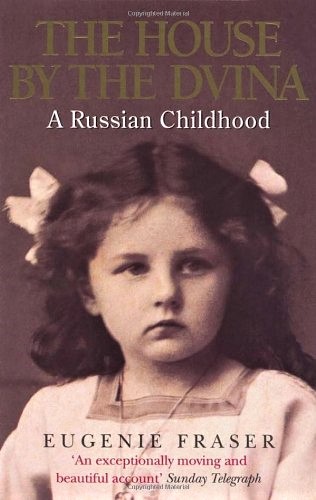
P.S. The House by the Dvina by Eugenie Fraser is an interesting book. I bought it in London during a trip overseas.


— posted by Roger W. Smith

   March 7, 2021; updated March 10


*****************************************************


addendum, March 2025


The web site A Russian Affair has been deleted and no longer exists.

Robert G. Ingersoll, “Address at the Funeral of Walt Whitman”


Robert G. Ingersoll, ‘Address at the Funeral of Walt Whitman’


Posted here (downloadable PDF document above) is Robert G. Ingersoll’s eulogy for Walt Whitman, which was delivered on March 30, 1892 at Harleigh Cemetery in Camden, New Jersey.


*****************************************************

Robert G. Ingersoll (1833-1899) was an American lawyer, writer, and orator. Known as “The Great Agnostic,” Ingersoll was a staunch advocate of free thought.

Ingersoll was a close friend of Walt Whitman. They had profound admiration for one another, as can be seen by anyone who reads Horace Traubel’s multivolume work With Walt Whitman in Camden. “It should not be surprising that I am drawn to Ingersoll, for he is ‘Leaves of Grass’ … He lives, embodies, the individuality, I preach. I see in Bob [Ingersoll] the noblest specimen–American-flavored–pure out of the soil, spreading, giving, demanding light,” Whitman told Traubel.


— posted by Roger W. Smith

   March 2021

lunacy triumphant (or, who’s in charge?)


My wife, a consultant to mathematics teachers in training (and a former mathematics teacher herself), told me about something that one of her mentees told her today.

As my wife explained it to me, there is a core problem for high school mathematics students involving probability which is used as a teaching tool and will often be on standard exams. The problem is as follows: What are the probabilities of parents who have three children having 1 boy and 2 girls? 1 girl and 2 boys? 2 boys and 1 girl? 2 girls and 1 boy? 3 boys? 3 girls?

Or, as follows:

What is the probability that all three children in a family will be the same gender?
P(all female)= 1/2 x 1/2 x 1/2 = 1/8
P(all male ) = 1/2 x 1/2 x 1/2 = 1/8
P(all one gender) = P(all female) + P(all male) = 1/8 + 1/8 = 1/4

What is the probability that a three-child family is two girls and one boy?
Each possible birth order has P=1/8. That is, P(G,G,B)=P(G,B,G)=P(B,G,G)=1/8.
So, P(2G,1B)= 3/8 and P(1G,2B)= 3/8.

This allows us to write the overall gender probability distribution for families of three children as follows:
1/8 will be three girls
3/8 will be two girls and one boy
3/8 will be one girl and two boys
1/8 will be three boys
Adding it all up, we have 1/8 + 3/8 + 3/8 + 1/8 = 1 (100%)


****************************************************

I vaguely remember doing such problems in high school math class. Didn’t Mendel do this with peas?

Well, guess what? My wife’s mentee informed her that this problem can NOT be taught any longer. A problem which refers to gender might be offensive to some students.

What’s next? How will biology be taught?

As a footnote of sorts, my wife told me that her mentee also told her that in a Spanish class in the school she is at — according to a student teacher the mentee knows — querulous students are voicing objections when nouns are assigned a gender: e.g., el mano. la mesa.

Who, I ask you, is in charge? Whom can we entrust with the wisdom and sense to instruct students?

Who is listening? Not to the students, but to the few people, educators in this case — it sometimes seems that they have all taken to the hills — who still have what used to be called common sense.


— Roger W. Smith

  March 2021

Pachelbel, harpsichord suites


Posted here are 42 harpsichord suites — performed by Joseph Payne — of the German composer Johann Pachelbel (1653-1706). It has been my feeling for some time that Pachelbel should be a lot better known than he is — and not just known for one or two famous works (e.g., his Canon in D).

Joseph Payne (1937-2008) was a harpsichordist and organist known for his pioneering recordings of early keyboard music.


Also posted here, two Pachelbel favorites:


Canon and Gigue in D Major


Toccata in E Minor for Organ


— posted by Roger W. Smith

   February 2021


*****************************************************

Addendum:


See also my post:

Pachelbel, Chaconne in D major; Chaconne in F minor

Pachelbel, Chaconne in D major; Chaconne in F minor

a storm at sea (Milton)


Meanwhile the Southwind rose, and, with black wings
Wide hovering, all the Clouds together drove
From under Heav’n; the Hills to their supple
Vapour, and Exhalation dusk and moist,
Sent up amain; and now the thicken’d Sky
Like a dark Ceiling stood; down rush’d the Rain
Impetuous; and continu’d, till the Earth
No more was seen: the floating Vessel swum
Uplifted, and secure with beaked prow
Rode tilting o’er the Waves; all dwellings else
Flood overwhelmed, and them with all their pomp
Deep under water rolled; Sea cover’d Sea,
Sea without shore;

— John Milton, Paradise Lost (Book XI)


(I have slightly modified the original spelling.)


*****************************************************


Has anyone ever written (painted in words) a more accurate, telling description of a rainstorm: in this case, a storm at sea (Milton is referring to The Flood)?

And to think that in college (in an English course I took) I couldn’t get into Milton, could not manage to read Paradise Lost.


— posted by Roger W. Smith


   February 2021

I never knew.


I love it when I learn something that should be obvious — something seemingly trivial, but not so, actually — that clears up a fundamental misunderstanding and enables one to see something in an entirely new way.

On CNN tonight, a commentator explained that “high crimes and misdemeanors” means crimes committed by individuals in positions of high office. Thus “high” does not modify “crimes,” which I always thought.

The way I always understood the phrase was — and it never quite made sense to me — that an elected official can be impeached for (1) “high crimes,” meaning very serious ones, perhaps treason or failing to faithfully execute the laws, plus (perhaps) serious crimes committed while in office, such as the usual worst felonies: murder, rape, kidnapping, etc.; or (2) “misdemeanors”: more petty crimes not befitting a public official or showing unfitness for office, such as cronyism or graft.

Wrong!

The adjective “high” modifies both “crimes” and “misdemeanors.” It is not meant to be fused with “crimes.” In context, “high” means committed by persons holding high office.


— Roger W. Smith

   February 9, 2021

Schubert


Posted here, the second movement

Andante con moto

of Franz Schubert’s String Quartet No. 14 in D minor (Death and the Maiden), performed by the Julliard String Quartet.


It speaks for itself — and for Schubert.

With my rudimentary knowledge of musical form, I realized that the second movement is in the form of theme and variations, something we learned about in a so-so music appreciation course I took in college.


posted by Roger W. Smith

   February 2021