Tag Archives: Roger W. Smith

Purcell!


This track contains mezzo-soprano Dame Janet Baker’s performance of the aria “When I Am Laid In My Grave” (also known as Dido’s lament) from Henry Purcell’s opera Dido and Aeneas.

It was on  side 2 of a precious LP that I purchased in a Manhattan record store in the 1970s: of a groundbreaking performance conducted by Anthony Lewis (made in the 1950s) of Purcell’s opera.

I don’t think I have ever heard a more beautiful aria. Purcell’s death, at the age 36,  was a tragic loss — speaking in general terms, to music.


— Roger W. Smith

   December 2020

Racism should be recognized for what it is.


Re:

Biden is giving most-coveted jobs to those he knows well. That may help Doug Jones get Justice.

By James Hohmann, with Mariana Alfarowatg

The Washington Post

December 9, 2020

https://www.washingtonpost.com/politics/2020/12/09/daily-202-biden-is-giving-most-coveted-jobs-those-he-knows-well-that-may-help-doug-jones-get-justice/

‘Biden Is Giving the Most Coveted Jobs’ – The Washington Post 12-9-2020


*****************************************************

The following are excerpts from the article, with my comments (in BOLDFACE).

Rep. Marcia Fudge (D-Ohio), a former chair of the Congressional Black Caucus, wanted to be secretary of agriculture.

“As this country becomes more and more diverse, we’re going to have to stop looking at only certain agencies as those that people like me fit in,” Fudge told Politico last month. “You know, it’s always ‘we want to put the Black person in Labor or HUD.’”

On Tuesday, President-elect Joe Biden put Fudge at HUD. If confirmed, the congresswoman from Cleveland will replace Ben Carson, who is also Black, as secretary of housing and urban development. …

For USDA, the president-elect picked his good friend Tom Vilsack, the former Iowa governor who is White and held the same job during all eight years of the Obama administration.

I am reminded, sort of — to be flippant — of a chess game. White and black.


The transition team put out word that Fudge was getting the housing job during an hour-and-45-minute virtual meeting that Biden and Vice President-elect Kamala Harris held with the leaders of seven civil rights groups. They had been grumbling in recent days that not enough African Americans are getting high-profile jobs, even though this constituency played a pivotal role in delivering the Democratic nomination. The news that Biden will nominate retired Gen. Lloyd Austin to be the first Black secretary of defense broke on the eve of this scheduled Zoom call.

During the conversation, NAACP President Derrick Johnson told Biden directly that he did not want Vilsack to get Agriculture, sources familiar with the exchange tell my colleague Annie Linskey. Some Black leaders still have hard feelings because of his 2010 firing of Shirley Sherrod, an African American who was Georgia state director of rural development for the department, after Breitbart posted misleading excerpts from a speech that she gave to make them appear racist. The full recording made clear her remarks had been taken out of context and she was offered another federal job.

Within an hour of their session wrapping up, though, the Biden team announced he will nominate Vilsack to lead the Agriculture Department. This was savvy political jujitsu. These staggered rollouts appeared carefully choreographed to blunt criticism.

Attorney general is the highest-profile Cabinet slot left to fill. There is a widespread belief among people close to the selection process that picking Austin and Fudge gives Biden more breathing room to pick a White man for attorney general. Multiple outlets, including NBC and CNN, report that Sen. Doug Jones (D-Ala.) is the leading contender to take over the Justice Department. …

President-Elect Biden needs “permission” to pick a white man for attorney general? Isn’t that racism? Since when did it become copacetic to bar someone for employment or an appointment (or consideration for same) on the account of skin color — or to suggest that this should be a valid reason for doing so?

Let’s say, for purposes of argument, that a black person has been selected as the next president of a university? I weigh in and say: that position has always been held by a white male, and most of the student body is white. I object to a black person being appointed. That’s okay, perfectly fine, for me to think or say?


All seven of the Black leaders who met virtually with Biden on Tuesday held a press call afterward to give a readout of their discussion. Al Sharpton said he told Biden that his preference is for a Black attorney general but that he could accept a White candidate “with a proven civil rights background.” This sounded like an implicit endorsement of Jones. “I said the least we could have is someone that has a proven civil rights background,” Sharpton said, “that’s going to handle this heightened racist bigoted atmosphere.” …

What are Al Sharpton’s qualifications to be advising the President-Elect on this matter? Zero. Sharpton has meager qualifications in this regard — in fact, none. He was a college dropout and has little knowledge or experience of anything, other than political activism. He is known as Rev. Sharpton (or Reverend Al) despite the fact that he never attended or graduated from divinity school (he was licensed and ordained a Pentecostal minister as a boy). His Reverend title is an honorific like Colonel Sanders or Colonel Tom Parker.

Sharpton permanently and irretrievably lost any credibility in the Tawana Brawley rape case. A grand jury found “overwhelming evidence” that Brawley (who was sued for defamation, defaulted by not attending the trial, absconded from New York to Virginia, and changed her name) had fabricated her story. Sharpton and two lawyers who also supported Brawley were successfully sued for defamation and were ordered to pay $345,000 in damages, with the jury finding them liable for making defamatory statements about Steven Pagones, an assistant district attorney in Duchess County, New York. Sharpton refused to pay his share of the damages. (It was later paid by a number of black business leaders.) Why is he treated unfailingly with respect as a public figure and authority/pundit?


*****************************************************

A final thought. My key point is that it has become acceptable among liberals who regard themselves in the vanguard of public opinion to use race as a metric in making decisions and judgments about people. This is done with no sense or admission that it might be wrong to do so, that it amounts to racism.

I want to make one thing clear. There are certainly public and human issues related to race. Our history of racism and discrimination. The treatment of (and continuing and persistent outrages against) blacks and other minorities. Class and racial prejudice. Persistent inequality in all areas, from economics to social status and educational opportunity. And so on.

Should someone say, or editorialize, that they want to see diversity in Biden’s cabinet (this pertains to representation of women as well as minorities) or that they are glad to see that his cabinet looks or is diverse, I would be (am) all for that. Since (let’s say, as one reason) blacks or women have been traditionally unrepresented in such positions, or their views on issues affecting minorities are important for the President and his administration to hear. It goes without saying that such views, such reasoning, are entirely valid. But it is not valid to say a white male should not be appointed to a cabinet position because of race. Racism should be recognized for what it is, plain and simple; and spoken out against — without fear, hesitation. or qualification — loudly and clearly. It is not okay, period. Liberals have decided that it is okay, and are not ashamed to openly embrace it.


— Roger W. Smith

  December 2020


*****************************************************

addendum, January 1, 2021

I agree with the point of view of an op-ed published in The Wall Street Journal this week:

“The Tyranny of Diversity: Its monomaniacal pursuit undermines other values—true equality among them.”

By Joseph Epstein

The Wall Street Journal

December 30, 2020

Joseph Epstein, ‘The Tyranny of Diversity

https://www.wsj.com/articles/the-tyranny-of-diversity-11609347729

I stated above:

Should someone say, or editorialize, that they want to see diversity in Biden’s cabinet (this pertains to representation of women as well as minorities) or that they are glad to see that his cabinet looks or is diverse, I would be (am) all for that. Since (let’s say, as one reason) blacks or women have been traditionally unrepresented in such positions, or their views on issues affecting minorities are important for the President and his administration to hear. It goes without saying that such views, such reasoning, are entirely valid. …

I do feel that these views are valid, as a guiding principle or aspirational goal. But, as I think Joseph Epstein would say, I also believe that in choosing appointees for a position, race, ethnicity, or sex should not be the controlling factor, that one wants the best man or woman for the job, period. So, excellence, in my view — however that is judged — should be the controlling or decisive factor.

In saying this, I realize that choosing among candidates can be difficult, and that the President may be thinking, for example, this woman would be a good choice because of sensitivity to women’s issues that (for various reasons) are important in the job; or the fact that a person belongs to a minority group may make him or her particularly sensitive to, aware of, or knowledgeable about issues affecting a minority group or groups. But I think there are dangers and there is ossification of thinking that results from trying to “keep score” by counting how many whites or blacks, males or females, etc. It’s the person and what the person has to offer in terms of qualifications and experience that count, not externals, which are just that.


— posted by Roger W. Smith

   December 2020

new coauthored article on Sorokin


‘Special Considerations in Translating Pitirim Sorokin’s Work’

‘Special Considerations in Translating Pitirim Sorokin’s Work’

Downloadable documents above.


Special considerations in translating Pitirim Sorokin’s work “City and country” (Prague, 1923)

By Natalia S. Sergieva and Roger W. Smith

филологические науки

Международный научный журнал

№ 6 Часть 2

Ноябрь 2020

(Philological Sciences, International Scientific Journal, No. 6, Part 2, November 2020)

pp.  227-232


— posted by Roger W. Smith

   December 2020

new vocabulary IV


new vocabulary words – December 2020


See attached downloadable Word document, above. It is my ongoing “diary” of words looked up during the past year. It shows that new vocabulary is acquired solely by READING.


— Roger W. Smith

   December 2020


*****************************************************


See also my posts:


new vocabulary III

new vocabulary III


vocabulary redux

vocabulary redux

thoughts about Beethoven


‘5 Minutes That Will Make You Love Beethoven’


Re:

5 Minutes That Will Make You Love Beethoven

The New York Times

December 2, 2000


My younger brother alerted me and our siblings to this New York Times article, and asked us to pick a favorite among the Beethoven pieces discussed. The following is the text of an email of mine in reply to my brother.


*****************************************************

Thanks for sharing and alerting me to this Times article. I find such articles sort of silly, usually. But, here are my favorites.

Roger


Weston Sprott

The “incredible transition” into the work’s final movement (between the third and fourth movements) of Beethoven’s Fifth. Yes, incredible. It never fails to thrill me. It’s brilliant and overpowering.


Steve Reich

Slow (third) movement of the A minor String Quartet (Op. 132). Yes, so profoundly. Plumbs spiritual and emotional depths. I got to know the Late Quartets in my senior year in college. They were a revelation.


Patricia Morrisroe

“Moonlight” Sonata, third movement. The “Moonlight’ sonata was one of the first Beethoven piano sonatas I got to know, in my senior year in high school and, mostly, during the summer of 1964, when I listened to it countless times.


Paul Lewis

The first movement of the piano sonata Opus 78. For some reason, I got to know this sonata only rather recently. This movement is one of my absolute favorites among the piano sonatas. A brilliant opening. Is enchanting the right word?


Seth Colter Walls

The second movement of the Seventh Symphony. I became familiar with all the Beethoven symphonies quite early, in my teens. I probably did not really get to know the Seventh until my freshman year in college (thanks in large part to the portable stereo that Mom and Dad gave me as a high school graduation present). When I first heard the seventh symphony, I found the second movement haunting, and still do. Like a lot of great Beethoven music, great passages, it is unique. He seems to be always original. Which is why he never tires (I should say, to be grammatically correct, never tires the listener).


— posted by Roger W. Smith

   December 2020
Toynbee and Gibbon


In London [in 1919], in the southern section of the Buckingham Palace Road, walking southward along the pavement skirting the west wall of Victoria Station, the writer, once, one afternoon not long after the end of the First World War–he had failed to record the exact date–had found himself in communion, not just with this or that episode in History, but with all that had been, and was, and was to come. In that instant he was directly aware of the passage of History gently flowing through him in a mighty current, and of his own life welling like a wave in the flow of this vast tide …. An instant later, the communion had ceased, and the dreamer was back again in the every-day cockney world.

— Arnold J. Toynbee, A Study of History


It was at Rome, on the 15th of October 1764, as I sat musing amidst the ruins of the Capitol, while the bare-footed fryars were singing vespers in the temple of Jupiter, that the idea of writing the decline and fall of the city first started to my mind. But my original plan was circumscribed to the decay of the city rather than of the empire: and though my reading and reflections began to point towards that object, some years elapsed, and several avocations intervened, before I was seriously engaged in the execution of that laborious work.

— Edward Gibbon, Memoirs of My Life and Writings


— posted by Roger W. Smith

  December 2020

“Probably I caught you young and over influenced you.”


An invaluable (but it seems not widely recognized, probably because most people read superficially), occasional occurrence in reading is that one comes across observations that jostle the mind (suggest new ways of looking at things) and “surface” (which is to say bring to mind; elicit in one’s consciousness) “new” thoughts and formulations that one was not looking for, that come unexpectedly, that are “ancillary” to the subject or main topic of the book.


*****************************************************

From William H. McNeill’s biography of Arnold J. Toynbee:

On her twenty-first birthday Gilbert Murray wrote to [his daughter, Rosalind Murray] as follows: “It is very strange to think of you being a grown up woman, though in a way you have been like a grown up companion to me since you were about eleven.” That, indeed, was why establishing real independence of her father was so hard. Gilbert Murray had shared literary interests with Rosalind which he could not share with his wife; and when she began to show precocious skill he undoubtedly transferred some of his own disappointed literary aspirations to his daughter. (Murray was related both to Rudyard Kipling and to W. S. Gilbert; and he once confessed that as a young man he had been jealous of Kipling’s literary success.) … Gilbert Murray … both wished to see his daughter become independent and hated to have her do so. “We used to be rather specially close and intimate,” he wrote to her in 1912, “and agree in our interests and ideas. Probably I caught you young and over influenced you. And now you are thinking for yourself in all sorts of ways and differing from me, not so much in views as in general feelings. That is all right. Only the process of breaking asunder is a necessarily painful one: it has been so for me and I imagine that it probably has for you. And I know I have sometimes been sarcastic and unkind …. And, dear, I am very sorry and won’t do it any more.” … [Gilbert Murray letter to his daughter Rosalind, June 29, 1912]

“It may be that . . . I am no longer any good to you. … I think about you constantly, I admire your work, and I love you. I think, in trying to readjust our relations from parent and child to friend and friend, we have both made a lot of blunders. It is a difficult job and we were sure to do so. But it would be rather humiliating if you and I had not enough brains and sensitiveness to avoid the most ordinary pitfalls of life.” [Gilbert Murray letter to his daughter Rosalind, December 14, 1912]

Yet, even though the family pattern meant that they were often separated, by far the most important person in Rosalind’s childhood was [her father] Gilbert Murray. When she was only one and half years old, Murray set out ”to teach her to talk by making her give me orders–‘Run’, ‘Stop’, etc.” “It is a great help she is so intelligent,” he informed her grandmother in 1893. He cultivated her (undoubtedly precocious) literary skills, asking her to write him poems when she went away to school and offering delicate, lighthearted criticism of the childish verses she sent back.

— William H. McNeill, Arnold J. Toynbee: A Life (Oxford University Press, 1989), pp. 56, 58-59


*****************************************************

Probably I caught you young and over influenced you.

Over-influence. Parental over-influence. At an early age (their children’s). During their children’s development years.

Has this been studied and written about by psychologists?

It is certainly worth thinking about.

One usually reads about the dangers of parental neglect, and the benefits (taken as a given) of parental involvement in their children’s lives. To foster and nurture (the latter) growth and wellness and the development of positive attributes. But is it possible that some parents become over involved? That a certain distance should be maintained?

This is tricky. But I thought of my own parents, who seemed to do a good job in this respect. They could at times — often, in fact — be overly critical. But many of my pursuits, interests, and achievements — while fostered by them to an extent (for example, my mother had a lot to do with instilling in me a love of reading) — were carried on by me largely independent of them: my thoughts in private, my activities (such as hanging out with, playing with, and learning from friends) not that closely supervised by them.

This makes me reflect on my own parenting style, possible faults of mine in this respect, and how no one ever seems to think about this.


*****************************************************

Rosalind Murray (1890–1967) was a British-born writer and novelist known for The Happy Tree and The Leading Note. Her father, Gilbert Murray (1866-1957), was a famous classical scholar.

In 1913, Rosalind Murray married the Oxford don Arnold J. Toynbee, who became a world famous historian.


— posted by Roger W. Smith

    November 2020

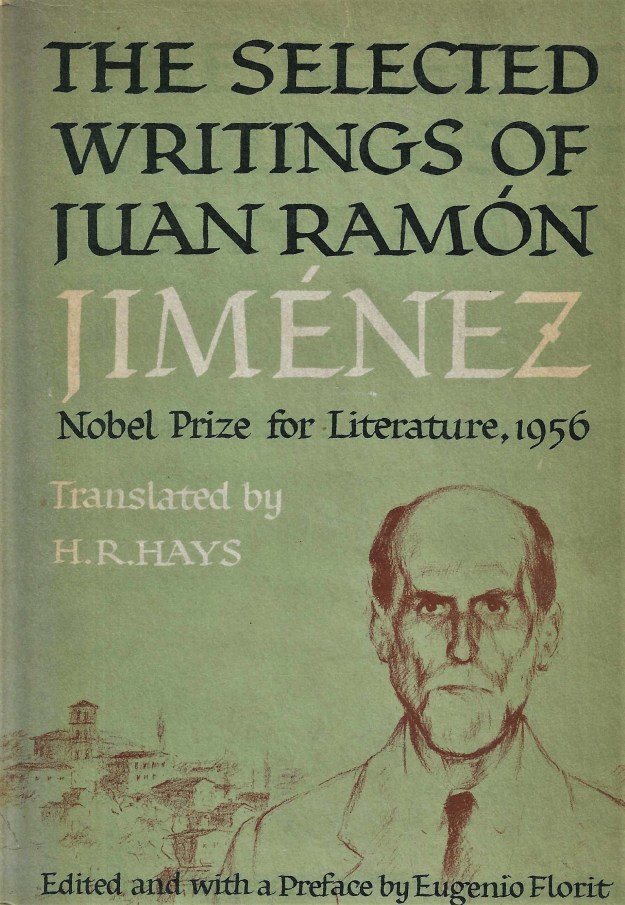
Eugenio Florit, preface to “Selected Writings of Juan Ramón Jiménez”


Florit preface


Posted here (downloadable Word document above) is the preface, by Eugenio Florit, to Selected Writings of Juan Ramón Jiménez, translated by H. R. Hays (New York: Farrar, Straus and Cudahy, 1957). It is a very well written essay, and Florit provides a comprehensive, brilliant overview of Jiménez’s oeuvre.

I believe this book — and presumably Florit’s preface — are not readily available.

Eugenio Florit (1903-1999) was a Cuban-American poet, critic and essayist and a Professor of Spanish at Columbia University. I studied Spanish at Columbia under his brother Ricardo Florit.


— posted by Roger W. Smith

   November 2020


supermom Amy Coney Barrett on family separation


Since Amy Coney Barrett was nominated to the Supreme Court, Republicans have suggested that one of the reasons she should be given a lifetime appointment on the highest court of the land is that she has seven kids. Barrett is “a remarkable mother” with “seven beautiful children,” Senator Thom Tillis said during the first day of her confirmation hearing [October 12, 2020]. She’s a “tireless mother of seven,” Senator Chuck Grassley told the room. “She and her husband have seven children,” Senator Lindsey Graham said in his opening remarks, in case anyone hadn’t heard, before giving her two more. “She and her husband have seven children. Two adopted. Nine seems to be a good number,” he said. Obviously, constantly bringing up this part of Barrett’s biography is part of an attempt on Republicans’ part to (1) draw a distinction between Barrett and what they view as childless heathen Democrats, (2) claim that any opposition to her confirmation is anti-mom, and (3) suggest that since she’s a mother, she must be a good person who couldn’t possibly issue rulings that would hurt millions of people.

But, surprise! Despite being a mother, Barrett is expected to help overturn the Affordable Care Act. … She will also very likely go after Roe v. Wade, if given the chance. … And even though she’s a mom of seven children, she apparently thinks the jury is still out on whether or not it’s bad to separate small children from their parents, if they happen to be from another country:

In one of the only discussions of immigration to arise during the confirmation hearings, Barrett declined to say whether she thought it was wrong to separate migrant children from their parents to deter immigration to the United States. “That’s a matter of hot political debate in which I can’t express a view or be drawn into as a judge,” Barrett said in response to a question from Sen. Cory Booker (D-N.J.). Booker said he respected her position but asked again: “Do you think it’s wrong to separate a child from their parent, not for the safety of the child or parent but to send a message. As a human being, do you believe that that’s wrong?”

Barrett told Booker she felt as if he was trying to engage her on the Trump administration’s border separation policy. Under the policy, immigration officials applied a “zero-tolerance” approach to undocumented immigration and separated families crossing the border through Mexico. “I can’t express a view on that,” Barrett said. “I’m not expressing assent or dissent with the morality of that position—I just can’t be drawn into a debate about the administration’s immigration policy.”

Booker responded that, actually, he was simply asking “basic questions of human rights, human decency, and human dignity,” which one might think a staunchly pro-life individual and mother of seven might be able to answer.

— “Amy Coney Barrett, Mother of Seven, Not Sure If Separating Migrant Children From Their Parents Is Bad: The Supreme Court nominee curiously refused to give an answer on this one.” by Bess Levin, Vanity Fair, October 14, 2020


At her confirmation hearing on October 14, Senator Richard Blumenthal asked Barrett whether Brown v. Board of Education and Loving v. Virginia were correctly decided. Barrett did not hesitate to reply yes. So Blumenthal pressed her on why she will not say the same about Griswold v. Connecticut, the landmark decision of the Supreme Court on the liberty of married couples to buy and use contraceptives.


*****************************************************

What we have here is the usual coldhearted, calculated cunning.

The doctrine of “separate but equal” was court precedent, set by the court’s ruling in Plessy v. Ferguson in 1896. But everyone now agrees that it is wrong. Yes, it was overruled (meaning that it was once the law). But no one questions now that it is and was morally wrong.

So, Barrett can make statements (judgments) about some court opinions and some doctrines, but not others? She can’t express a personal view on human grounds –as a human being, as a parent herself — on the morality of separating parents from children? I don’t care in what setting she is being asked to express views. She can’t see that it is wrong and flat out say it, regardless of how she has been coached? Would she not be prepared to say, without hesitation, that segregation and discrimination are wrong?

Barrett said “I’m not expressing assent or dissent with the morality of that position.” In other words, she can see in the abstract that such separations might be okay — or, to put it another way — that there is nothing a priori wrong with separating immigrant children from parents?

That’s deplorable.

Judges take upon the themselves the mantle of objectivity and impartiality. It’s as if they are supposed to be a tabula rasa.

Of course, this is not true of anyone’s psyche and does not accord with actual humanity.

This is creepy. Can’t one ascribe to being high minded, fair, impartial, “above the fray” without having to give up all “pretense” of being human, which is to say, normal — someone with certain feelings shared by normal people? Of having some basic notions of right and wrong that are “extra-juridical, in one’s heart and soul, that attest to certain values that make one precisely human and that reassure us that this is so. Are we hiring scrubbed and whitewashed minds for the court, who must leave their humanity at the door?


— posted by Roger W. Smith

   November 2020

Walt Whitman, “Our City”


Walt Whitman, ‘Our City’

Our City

NEW YORK is a great place — a mighty world in itself. Strangers who come here for the first time in their lives, spend week after week, and yet find that there are still hundreds of wonders and surprises, and (to them) oddities, which they have not had a chance of examining. Here are people of all classes and stages of rank — from all countries on the globe — engaged in all the varieties of avocations — of every grade, every hue of ignorance and learning, morality and vice, wealth and want, fashion and coarseness, breeding and brutality, elevation and degradation, impudence and modesty.

Coming up Broadway, from the Bowling Green, an observer will notice, on each side, tall, quiet looking houses, with no great aspect of life or business. These are mostly boarding houses; and notwith­standing their still look, they no doubt contain within their walls no small number of occupants. Here the sidewalks and the street pre­sent hut few passengers. After passing Trinity Church, however, the crowd thickens, and the ground stories of the buildings are prin­cipally occupied as shops. Along this section of Broadway are sev­eral crack hotels. If you pass at the latter part of the day, you will see little groups of well dressed men, picking their teeth lazily, and enjoying an after dinner lounge. Near here, there are two shops which deserve especial notice. Judging by their capacious windows, they are for the sale of knicknacks, and fancy articles of all descrip­tions, from a chess board or an escritoire to a toothpick. From a glance at these treasures, a person can hardly help reflecting how many thousand wants, altogether imaginary, one may he led to have through the refinements of civilization.

Directly afterward, you will notice two crowds gazing at the prints in the windows of a book store. This is Colman’s. If you chance to stop there for the same purpose as the rest, look out for the contents of your pockets. We mean this in a double sense; for if you are not incited to purchase some of the alluring literary beauties to be had at Colman’s, it is quite possible that you may he otherwise relieved of your cash by some of the swells who there do congregate.

Then you come to where the Park thrusts out as a kind of wedge between Broadway and the beginning of Park Row. If you take the left, you have to make way against a great current of fashion, idleness, and foppery. Suppose you turn to the right.

Down you walk — first stopping to gaze a moment at St. Paul’s, which, with its steeple the other way, seems as if it wanted to walk off from amid so much tumult and din — and at that very respectable small city, the Astor House. A few rods, and you are in front of an ambiguous structure, of a dirty white color, and which you internally set down in your mind as the most villainous specimen of architecture you ever beheld. This is the Park theatre — or, as some of our people, with a very untasty habit of copying whatever is foreign, term it, the Old Drury. You will not wonder, when you hear that the manager has been very unsuccessful of late, maugre all his ener­getic and liberal catering. What benignant spirit could ever plume his wings on the top of such a temple?

By and by, you arrive at an open space, whereabout, if you look sharp, you will behold the name of one of the wonders of the city — that is, the “New York Aurora.” In all probability your ears will be greeted with the discordant notes of the newsboys, who generally muster here in great force. A door or two further is Tammany Hall, the Mecca of democracy — the time honored, soul endeared holy of holies, to all who go for anti monopoly, and the largest freedom of the largest number.

The City Hall on the left, with its redundance of marble tracery and ornament, will not probably strike you as being anything very extensive — so pass we on.

Now you come into the region of Jews, jewelry, and second hand clothing. Here and there, the magic “three balls” hold out hope to those whose ill luck makes them grasp at even the smallest favors.

Passing the Pearl street crossing, and the Chatham theatre, you are in the large triangle which people call Chatham square. In the middle are dray carts, coaches, and cabs: on the right loom up small hills of furniture, of every quality, with here and there an auctioneer, standing on a table or barrel top, and crying out to the crowd around him, the merits of the articles, and the bids made for them.

Then up the Bowery, which presents the most heterogeneous melange of any street in the city: stores of all kinds and people of all kinds, are to be met with every forty rods. You come by and by to the Bowery theatre; this is one of the best looking buildings in the city.

If you keep up the Bowery, you will lose yourself at last in the midst of vacant squares, unfenced lots, and unbuilt streets.

If you turn to the right, you will come into some of the dirtiest looking places in New York. Pitt, Ridge, Attorney and Willett streets, and all thereabout, are quite thickly settled with German emigrants.

If you wind your steps leftward, you will have a chance of promenading to suit any taste you may he possessed of. You can lead off into some of the most aristocratic thorough-fares, or some of the lowest, or some of a medium between both.

— Walt Whitman, The New York Aurora, March 8, 1842


*****************************************************

Walt Whitman’s 1842 walk took him from the Battery (where I often start my walks) — the southernmost point of Manhattan — uptown to the area of Delancey Street on what is now the Lower East Side. I have walked the same route so many, many times.

I take the same delight — and experience the same perpetual wonder — in the City that Whitman did. He is my Doppelgänger. I feel such kinship with him.


— posted by Roger W. Smith

   November 2020